

By WePrintBarCodes.com| Published: August 1, 2025
Barcodes are an essential tool for businesses of all sizes, helping streamline inventory management, point-of-sale transactions, shipping logistics, and product tracking. But not all barcodes are the same. Choosing the right barcode symbology is crucial for ensuring compatibility with scanners, data accuracy, and compliance with industry standards.
This guide explains what barcode symbology is, the most common types available, factors to consider when choosing one, and tips for selecting the best fit for your business needs.
1. What Is Barcode Symbology?
A barcode symbology is the specific pattern or standard used to encode information in a barcode. Each symbology defines how data is represented using bars, spaces, or squares and how scanners interpret that data.
There are two main categories:
- 1D (Linear) Barcodes: These use parallel lines and spaces to encode data. Examples include UPC, EAN, and Code 128.
- 2D Barcodes: These use patterns of dots, squares, or hexagons to store more data in a compact space. Examples include QR codes and Data Matrix codes.
The symbology you choose determines what data you can store, how much space you need, and which scanners can read it.
2. Why Choosing the Right Symbology Matters
Using the wrong symbology can lead to operational inefficiencies, scanning errors, and even compliance issues. Some industries mandate specific barcode types (such as UPC codes in retail or GS1 DataMatrix in pharmaceuticals). The right symbology ensures:
- Compatibility: Works with your scanners, printers, and software.
- Accuracy: Reduces misreads and data entry errors.
- Compliance: Meets industry or government labeling requirements.
- Efficiency: Encodes enough data while fitting the available label space.
3. Factors to Consider When Choosing a Barcode Symbology
a) Data Type and Volume
- Numeric-only data: UPC-A, EAN-13, or ITF-14 are ideal.
- Alphanumeric data: Code 39 or Code 128 works well.
- Large data storage: 2D codes like QR Code or Data Matrix hold more information.
b) Size and Space Constraints
Some barcodes require more space. For example, UPC codes have a fixed size, while Code 128 can be made more compact. If your product packaging has limited room, consider high-density symbologies or 2D codes.
c) Scanning Environment
- Retail checkout scanners: Optimized for UPC and EAN codes.
- Industrial or long-distance scanning: ITF-14 or Code 39 can handle lower print quality and wider tolerances.
- Mobile phone scanning: QR codes are universally readable with smartphones.
d) Printing Capabilities
Your printer resolution impacts the quality of barcodes. High-density symbologies require precise printing, while ITF-14 or Code 39 are more tolerant of imperfections.
e) Industry Standards
- Retail: UPC or EAN for global product identification.
- Shipping and logistics: Code 128 or ITF-14 for carton labeling.
- Healthcare and pharmaceuticals: GS1 DataMatrix for serialization.
- Automotive and aerospace: Code 39 for part tracking.
f) Future Scalability
Think ahead. If your business may need to store more data or expand globally, choosing a flexible, widely supported symbology like Code 128 or Data Matrix can prevent costly label redesigns later.
4. Common Barcode Symbologies and Their Uses
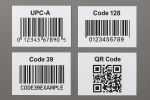
UPC-A (Universal Product Code)
- Use case: Retail products in North America.
- Data type: Numeric only (12 digits).
- Pros: Industry standard for point-of-sale.
- Cons: Limited to fixed-length data.
EAN-13 (European Article Number)
- Use case: Global retail.
- Data type: Numeric (13 digits).
- Pros: International compatibility.
- Cons: Same limitations as UPC.
Code 39
- Use case: Industrial applications, non-retail.
- Data type: Alphanumeric.
- Pros: Easy to print, widely supported.
- Cons: Low data density; longer barcodes for more characters.
Code 128
- Use case: Shipping, inventory, and logistics.
- Data type: Alphanumeric; high data density.
- Pros: Compact, supports various character sets.
- Cons: Requires precise printing for accuracy.
ITF-14 (Interleaved 2 of 5)
- Use case: Carton and case labeling.
- Data type: Numeric only.
- Pros: Durable, scannable even on rough surfaces.
- Cons: Not suitable for POS scanning.
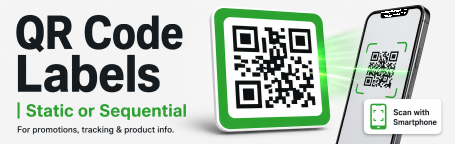
QR Code
- Use case: Marketing, product tracking, mobile-friendly applications.
- Data type: Numeric, alphanumeric, binary, or URLs.
- Pros: Stores large amounts of data, readable by smartphones.
- Cons: Requires 2D scanners for industrial use.
Data Matrix
- Use case: Pharmaceuticals, electronics, aerospace.
- Data type: High-density data encoding.
- Pros: Works on small labels, high error correction.
- Cons: Requires 2D scanning equipment.
5. Steps to Choosing the Right Symbology
- Define Your Data Needs: Decide what information your barcode must carry (e.g., product ID, lot number, expiration date).
- Identify Industry Requirements: Check if your sector mandates UPC, EAN, GS1, or other codes.
- Assess Physical Constraints: Consider the available label space and printing capabilities.
- Evaluate Scanner Compatibility: Ensure your current or planned scanners can read the symbology.
- Plan for Growth: If you might need to encode more data later, choose a flexible symbology like Code 128 or 2D codes.
6. Best Practices for Implementation
- Work with a professional barcode printer: Quality printing ensures reliable scanning.
- Test before mass production: Verify readability under real-world conditions.
- Use proper quiet zones: Leave blank space around the barcode to aid scanning.
- Keep consistency: Use the same symbology across similar products for simplicity.
Conclusion
Choosing the right barcode symbology is a critical step in setting up an efficient, reliable labeling system. By considering data requirements, space constraints, scanning environment, industry standards, and future scalability, you can select a barcode type that supports smooth operations and minimizes errors.
Whether you need UPC codes for retail, Code 128 for logistics, or QR codes for dynamic data, selecting the right symbology ensures your business runs efficiently and remains compliant with customer and regulatory requirements. Contact WePrintBarCodes.com for all your barcode label needs.

